 Guadeloupe .net
Banane Guadeloupe
Present since the 19th century in Guadeloupe, the banana plant was initially used as a shade plant for cocoa and coffee crops. Several events imposed banana cultivation: the destruction of cocoa and coffee plantations following the 1928 hurricane, the sugar cane crisis in the 1970s and facilitated maritime trade with France.
Currently, banana production experiences uncertainties; it is first of all dependent on the climate, and must face strong competition from Latin American countries where production costs are much lower.
Several varieties of bananas are grown in Guadeloupe, such as "poyo", plantain, figue sucrée or banane pomme, for example.
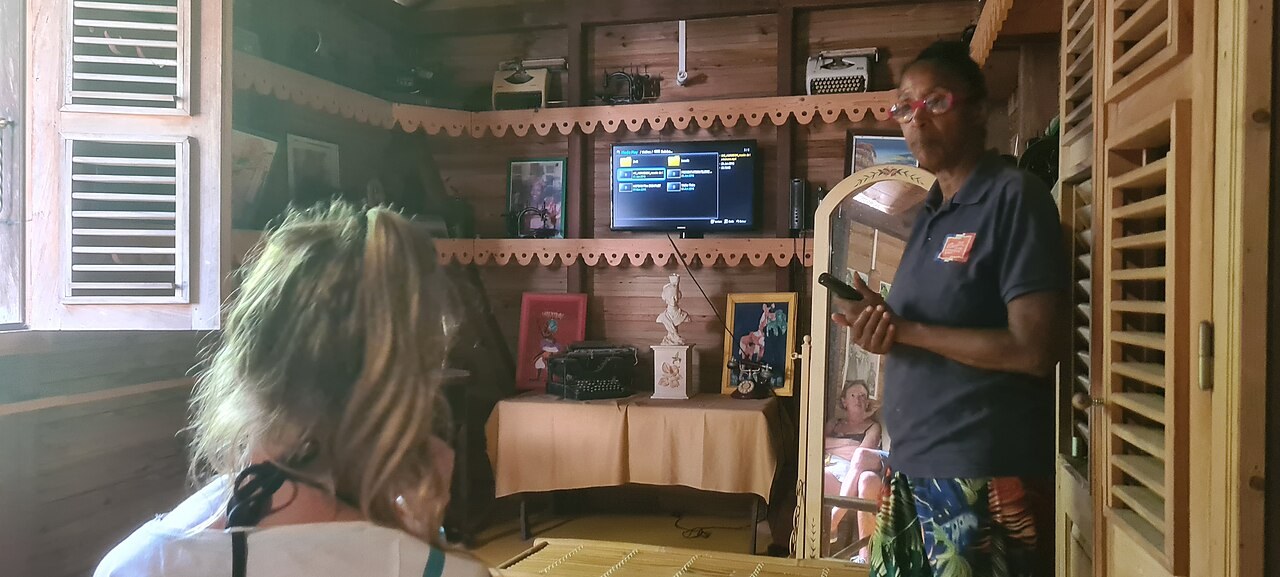
If you want to know everything about the banana, you can visit the Maison de la Banane located in Trois-Rivières.
In Bélair, every year, the Grand café plantation, which is indeed a banana plantation, celebrates the Fête de la banane, where you can discover many banana-based products: liqueur, sweets, cakes, macarons, chips, essential oils or even vinegar, and local artisans will craft decorations and objects for you from banana leaves.