 Guadeloupe .net

Capesterre-Belle-Eau
The history of Capesterre-Belle-Eau is marked by the arrival of Christopher Columbus on Monday, November 4, 1493, and by his second stop in 1496. Then there is the whole history of the colonization of Guadeloupe, between the Spanish, who fled in 1514 fearing the dangers of the island, and the French, with notable figures such as Richelieu, De l'Olive and Duplessis, Charles Houël, Jean Leblanc (a revolutionary Angolan slave) and many other important figures, not forgetting the act dividing St Christopher between the French and the English in 1627, as well as the Dutch Jews and Protestants who settled there in 1654. In 1644, Houël introduced sugarcane to Capesterre, which received its first mill for sugar production. After the abolition of slavery in 1848, the "Hindus" were hired to work the land. Capesterre has been called Capesterre-Belle-Eau since June 4, 1974. But it is above all a land of Carib and Arawak Amerindians; before the arrival of Christopher Columbus, they were nomadic.
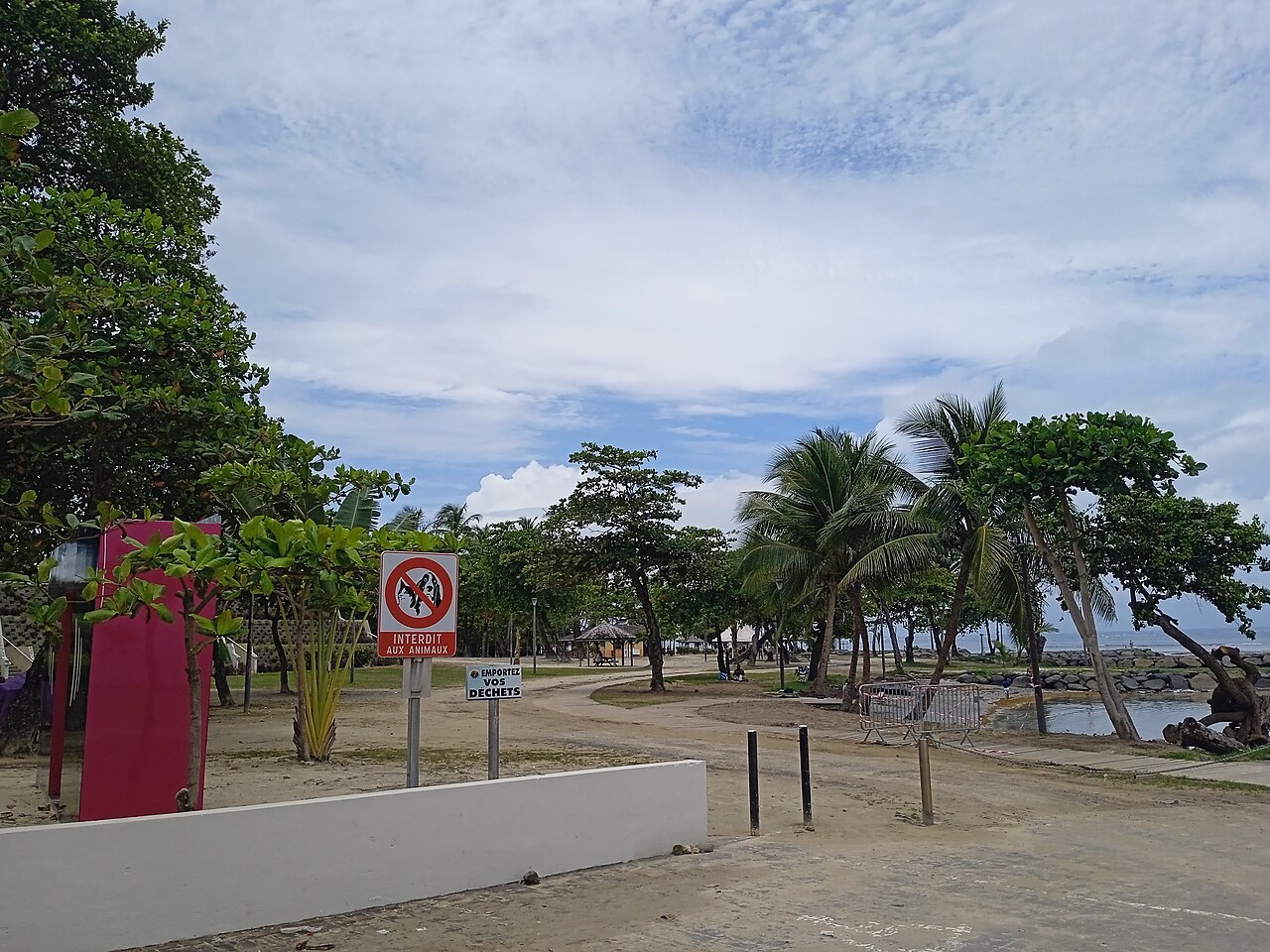
A few monuments reflect the history and culture of Capesterre-Belle-Eau, such as the bust of Christopher Columbus at Sainte-Marie, the Changy Hindu temple, the slave cemetery, the former house of St John Perse (poet and diplomat), the Kassaverie, the Rhum Longueteau distillery and the Marquisat factory. Magnificent places for walks among gardens and green spaces, such as the spice and scent garden of Catamerle (a tropical flower park with spice trails), the Carbet Falls (the most visited site in Guadeloupe, with a gentle, bubbling pool), the Grand Étang, the state forest, the Grand Café Bel Air plantation, the Roseau beach and the Allée Dumanoir, are well worth visiting. There are also some of the most beautiful rivers in Guadeloupe. For leisure, there is, among other things, a library, a cinema-theater, a music school, a sports palace and a municipal stadium.
The current mayor of the town is Joël Beaugendre; he was re-elected in March 2014.
Amédée Fingarol, Sonny Rupaire, Arsène Marcel Chavriacouty, Benjamin Moïse, known as Benzo, Gérard Lauriette, known as Kok or Papa Yaya, as well as Paul Lacavé, are the personalities linked to the municipality of Capesterre-Belle-Eau.
The town of Capesterre-Belle-Eau is the place that benefits most from direct FEAGA payments under the Common Agricultural Policy (CAP) in France, namely €4,225,000 between 2007 and 2008.
Maire en exercice
Jean-Philippe COURTOIS — en fonction depuis le 21 mars 2026
Source : Répertoire national des élus, données au 11 août 2026.