 Guadeloupe .net
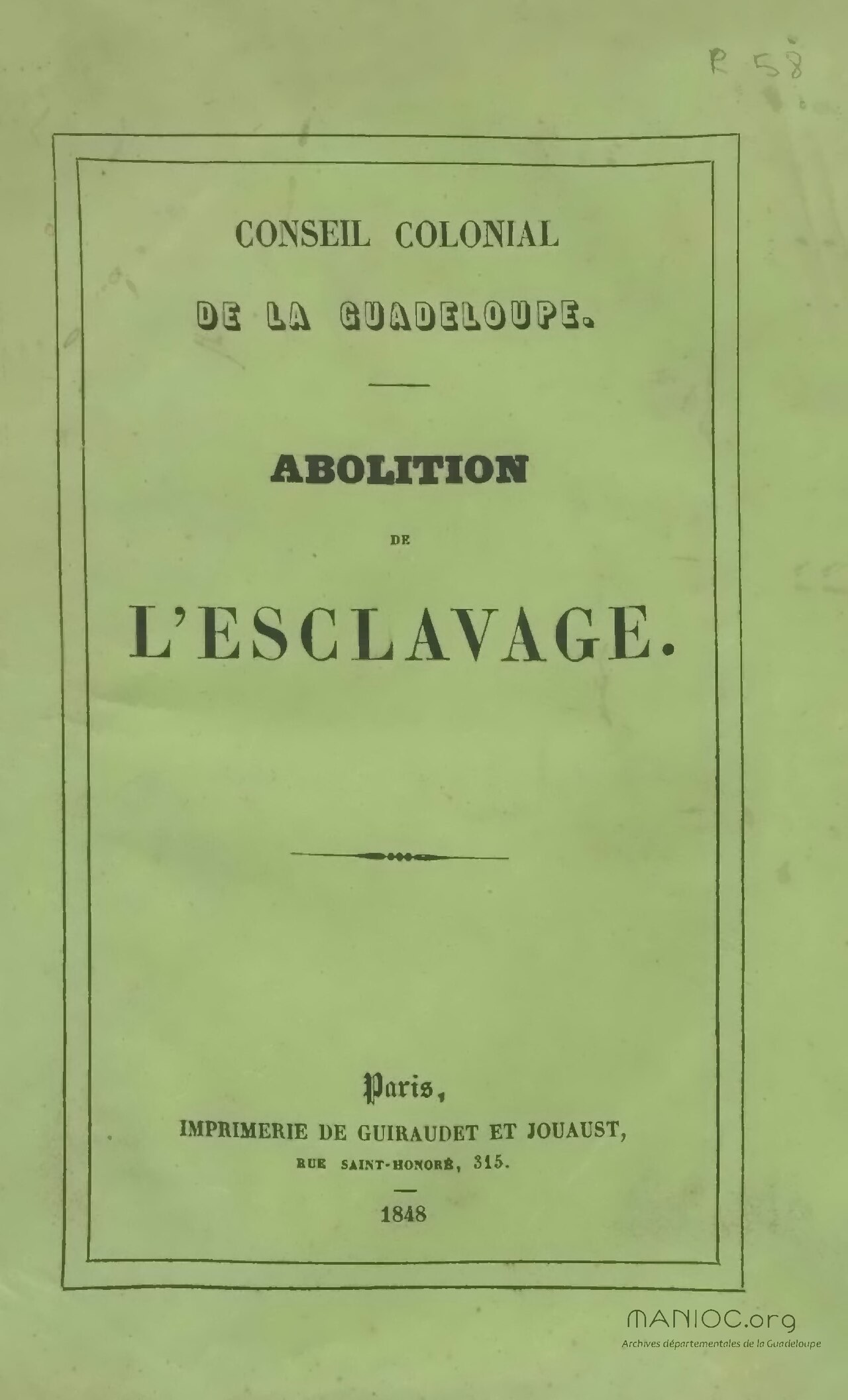
Abolition de l'esclave
Thus, at the beginning of 1788, there were nearly 90,000 slaves against only 14,000 whites; with the French Revolution and the Convention that abolished slavery, the owners did not look favorably on this new surge of freedom blowing over the island. The governor of the island as well as the assembly refused to submit to the new directives taken by the Convention, and an expedition was then led to liberate Guadeloupe, headed by Victor Hugues.
Hugues proclaimed the abolition of slavery and enlisted a large number of slaves in his army of the Republic. He installed on the island a revolutionary tribunal that condemned a large number of former white owners to the guillotine. Between 1794 and 1798 he made a regime of terror reign over the island. The regime he established was also terrible for the former slaves, who revolted several times because they were not paid. Repression was carried out in blood before Victor Hugues was recalled to France and sent to Guiana following his many excesses. However, with decree 2262 of 4 February 1794, France was the first country to abolish slavery, and Guadeloupe was the first region to benefit from it.
However, between July and August 1802 slavery was practiced again following the transgression of the act of abolition by Admiral Jean-Baptiste Lacrosse as well as by prefect Daniel Lescallier and by General Antoine Richepance. On 29 March 1815 Napoleon Bonaparte decreed the abolition of the slave trade, but it was really in 1848 that slavery was definitively abolished thanks to the action of Victor Schoelcher.
However, in Guadeloupe the abolition of slavery would only take effect on 27 May 1848, one month after Schoelcher's decree. This marked the end of the plantation system as it had been practiced for several centuries, and voluntary workers were recruited to fill the labor shortage for this arduous work.