 Guadeloupe .net
Canne à sucre Guadeloupe
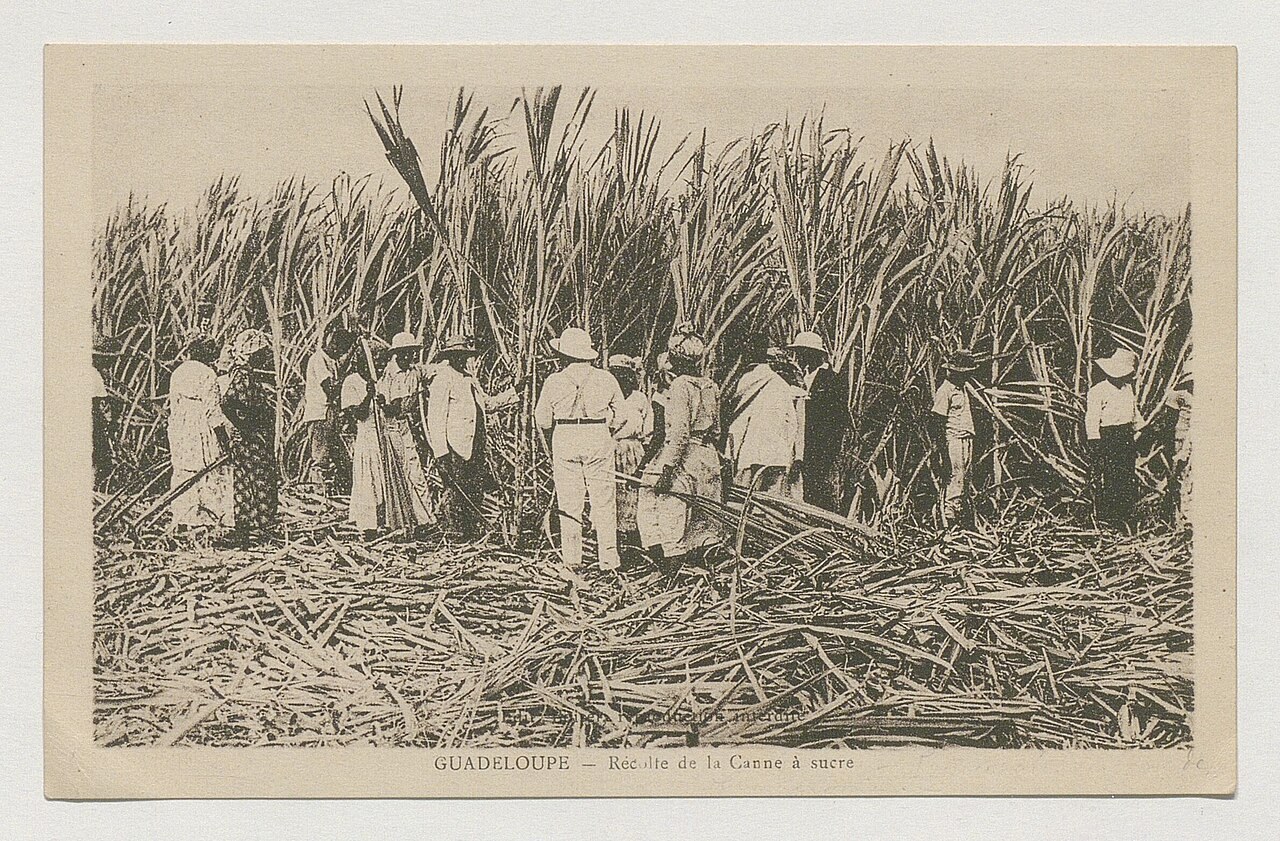
Sugarcane is destined for 2 types of industry: sugar and rum production.
The sugar sector reached its peak in the 1950s and 1960s; since then it has been in constant decline, and Guadeloupe now has only one sugar factory, the Gardel sugar factory in Le Moule, which you can visit. A factory is still present on Marie-Galante. Marie-Galante is also nicknamed "the island of a hundred mills", vestigial mills that were used to crush sugarcane. Between 1960 and 2000, annual sugar production was almost divided by three. These sugar factories make brown sugar, part of which is consumed locally, but almost all of the production is exported, mainly to mainland France, to refineries where the sugar is refined and whitened before being consumed in Europe.
Rum production, for its part, is booming. Guadeloupe rum also has a reputation for being one of the best in the world. 7 distilleries are present on the island: Damoiseau, Bielle, Reimonenq, Montebello, Saint Séverin, Longueteau, and Père Labat, and 3 on Marie-Galante. You can also visit some of these distilleries and make your purchases there.
A distinction must be made between 2 types of rum:
- agricultural rum: the juice obtained after crushing the sugarcane is fermented and then distilled. This category produces high-quality rums.
- molasses rum or industrial rum: molasses, a by-product of agricultural rum production, is distilled in turn to produce this type of rum.
In the same way, the rum produced is mainly exported.
The Beauport habitation in Saint-Louis and the rum museum in Sainte-Rose will tell you everything about the history and production of this alcohol.
In the end, more than 30,000 jobs are linked to sugarcane.
Apart from rum and sugar, more than 500 products are made from sugarcane. This is notably the case for bagasse, used to produce electricity, or as a component of livestock feed or as fertilizer.
Sugarcane therefore still has good prospects for the future.