 Guadeloupe .net
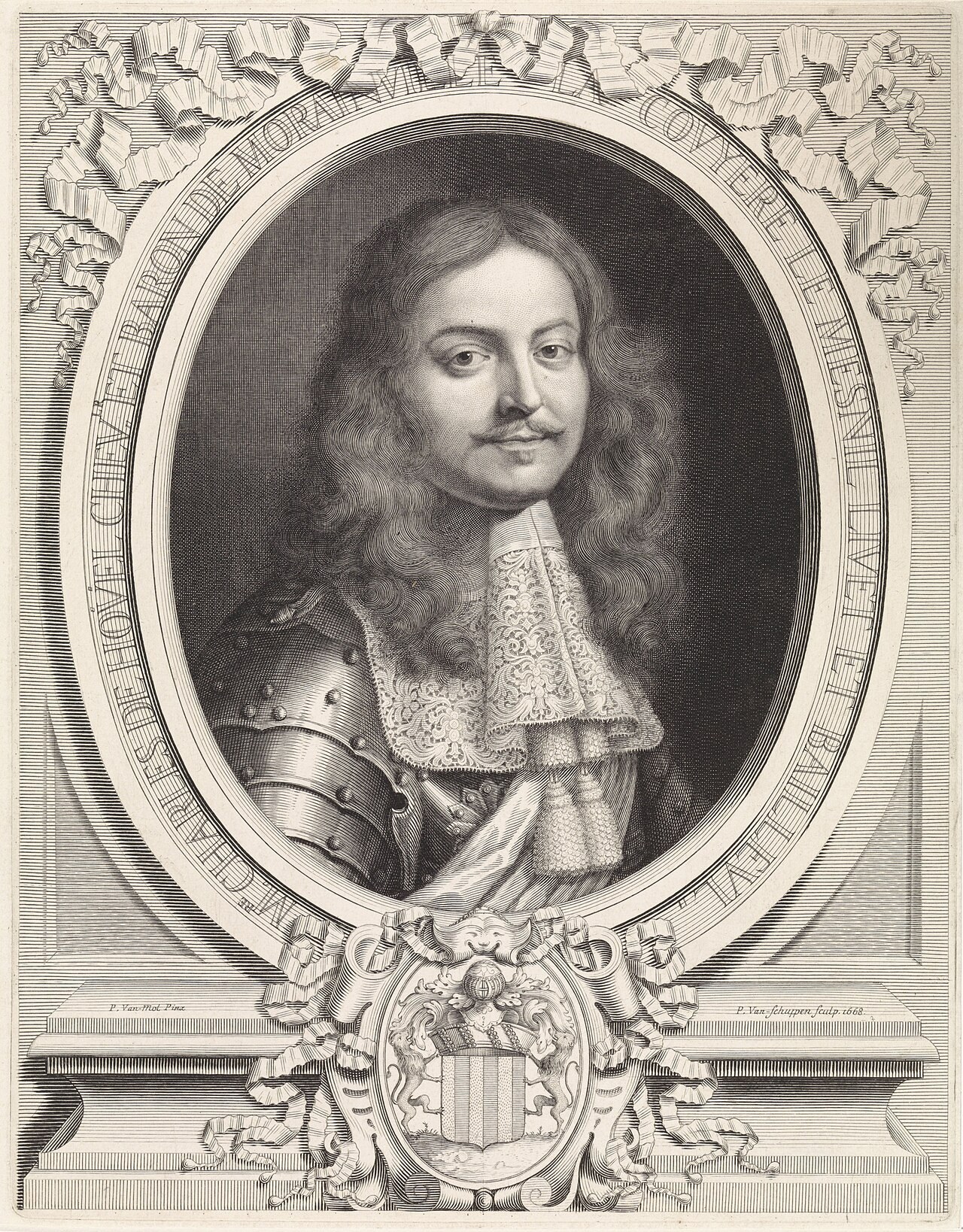
Charles Houël
The Company of the American Islands then appointed him governor general of Guadeloupe. He led the archipelago between 1643 and 1664 while taking part in its expansion. A royal proclamation allowed him to become the first judicial officer in Guadeloupe in 1645. Then the King of France, Louis XIV, named Charles Houël Marquis of Guadeloupe.
The Company of the American Islands, which owned the island, ceased all activity in 1648; as a result, Charles Houël joined forces with Jean De Boisseret d'Herblay, his brother-in-law, to buy back the island. They contributed to the growth of Guadeloupe through various sugar, cocoa and coffee plantations. In 1649, Charles Houël founded the town of Basse-Terre with the Carmel district, and his name was later given to a peak in the Caraïbes mountains, the Houêlmont.
His first mission was to maintain peace while taking part in numerous actions, including the construction in 1653 of the fort at Marie Galante. He assigned his brother, the knight Robert Houël, to carry out this task with 100 men.
In 1654, Charles decided to go to France; during his absence, command of the island was passed to his brother and his nephew. He married Mademoiselle Hencelin and then returned to Guadeloupe in 1656. Charles learned that his nephew had died and decided to send his brother to France to look after the interests of his new wife. A revolt then broke out in Guadeloupe because the governor declared that taxes would be increased; this decision created a wave of panic and the population revolted. He made a good number of promises that he did not keep.
Family disputes and tensions then divided Guadeloupe, because Governor Charles Houël was threatened by his nephews and his brother. He obtained a compromise under which an agreement was reached. Guadeloupe was in fact divided among the family and each obtained a part of the island. Charles Houël kept the Saint-Louis mountain.
In 1664, the French East India Company, which had been created by Colbert, held the monopoly on sugar exploitation. It was therefore tasked with buying the island back from Charles Houël in order to establish a new royal authority. An extradition was requested by the king for Charles Houël and his nephews; they were ordered to leave the island permanently. They all left on July 5, 1664, marking the end of Governor Charles Houël's rule over the island of Guadeloupe.