 Guadeloupe .net
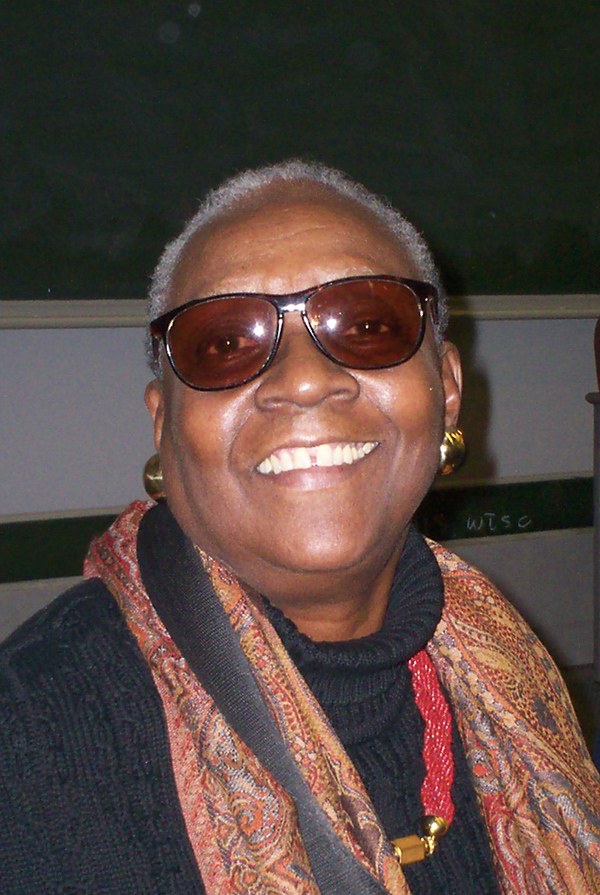
Maryse Condé
She then obtained a scholarship to teach in the United States and spent a year in Los Angeles. Homesick, after the publication of her novel “Ségou” she returned to Guadeloupe. Shortly afterwards she decided to leave Guadeloupe and settle again in the United States, where she studied at Columbia University.
In her novels, Maryse Condé writes about Africa, black identity, races, genders and cultures.
The historical novel “Segou” became a best-seller. In this novel she writes about the destinies of the royal sons of Brazil and the Caribbean, using several unknown historical documents (genealogies, ethnographic notes, maps).
In MOI, TITUBA, SORCIÉRE NOIRE SALEM, Maryse Condé writes an autobiographical transcription of a forgotten witch of Salem. In La Migration des Coeurs Maryse Condé reinterprets historical events that have become part of the heritage of Western culture.
Maryse Condé was president of the Committee for the Memory of Slavery, founded in 2004 to implement the Taubira law, slavery having been recognised in 2001 as a crime against humanity. Maryse Condé also published a brochure for Guadeloupe, several children's books and critiques on Aimé Césaire.
In the 1970s Maryse Condé wrote plays that were staged in the Antilles and in Paris.
After being absent for 30 years, Maryse Condé returned to Guadeloupe in 1986. She published her first novel in her native country, “la vie Scélérate”; since 1990 she has shared her time between her native country and the United States. During this period she taught at several universities such as the University of California, the University of Virginia, Berkeley, the University of Maryland, Harvard and Columbia. In 2004, after retiring, she continues to write and give lectures.
Maryse Condé has received several prizes and honours, among which:
In 1987 - Le Grand Prix Littéraire pour la Femme.
In 1988 – Le Prix pour La vie scélérate de l'Académie Française.
In 1988 - Le Prix LiBeratur for Ségou (Germany), Les murailles de terre.
In 1993 – Le Prix pour l'ensemble de l'oeuvre, Puterbaugh.
In 1994 – Le Grand Prix Littéraire des jeunes lecteurs (l'Ile de France).
In 1997 - Le Prix Carbet de la Caraïbe.
In 1998 - Membre de l'Académie des Lettres.
In 1999 - Prix Marguerite Yourcenar.
In 2001 - L'Ordre des Lettres et des Arts.
In 2003 - Grand Prix Metropolis bleu.
In 2005 - Hurston/Wright Legacy Award (fiction category), for Who Slashed Célanire's Throat?
In 2006 - Certificat d'honneur Maurice Cagnon du Conseil international d'études francophones
In 2007 - Prix Tropiques, for Victoire, les saveurs et les mots.
In 2008 - Trophée des arts afro-caribéens (fiction category), for Les Belles Ténébreuse
In 2010 - Grand prix du roman métis, for En attendant la montée des eaux
Her most important novels:
- Heremakhonon, Seghers, Paris, 1976.
- Ségou, Les murailles de terre, Robert Laffont, Paris, 1984.
- Une saison à Rihata, Robert Laffont, Paris, 1981.
- La terre