 Guadeloupe .net
Noix de coco Guadeloupe
The coconut palm is appreciated not only for the fruit it produces but also for the shade it provides during the great heat as well as for its aesthetic and ornamental appearance. The coconut that grows on it is a fruit of great richness that offers both drink and food. Its flesh and its juice are very high in calories, but the fruit is also rich in fiber, which promotes digestion. It was probably around the beginning of the 16th century that the Spanish colonizers introduced the fruit to Guadeloupe; they imported it from its native region, Southeast Asia, where the climate is close to that found in the Caribbean.
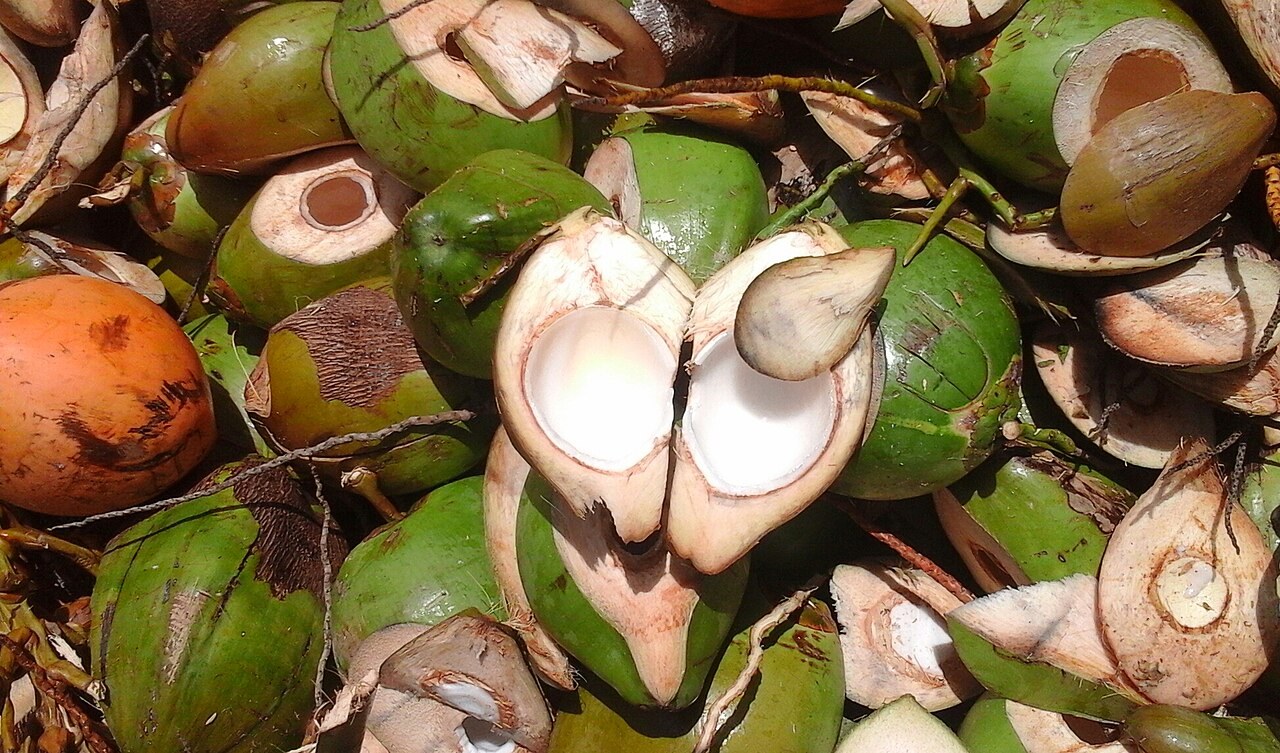
The coconut palm belongs to the palm family and can reach a height of about 25 meters, and it is the yellow leaves that grow at its top that give birth to the coconuts. The nuts are covered with a significant amount of fiber that is removed with a machete; inside is coconut water, with a very sweet taste, as well as white pulp, which is none other than solidified coconut water. The pulp can be consumed as a food, and it should be noted that during the war the product was used to make soap as well as oil.
In Antillean and Guadeloupean cooking, dried coconut is used, among other things, in baking to make coconut flour, coconut cakes or even tarts. Coconut jam is also made, which can be eaten as it is or used to make other desserts. The fruit itself measures 20 to 25 centimeters in length, and its flowering and fruiting take place all year round.