 Guadeloupe .net
Vanille Guadeloupe
Vanilla is a vine of the orchid family that 16th-century conquistadors discovered in Mexico through the Aztecs' use of it in their preparation of chocolate. It was therefore the vanilla pod (or more precisely the capsule) ready for consumption that Europeans sought to produce.
They had observed that the plant grew by clinging to a support, in shaded spots of hot, humid countries. Yet although these conditions were reproduced, the flower produced no pod, whether in a greenhouse or in the various tropical territories. This did not, however, prevent it from reproducing, since it propagates easily from cuttings. In fact, the plant was sterile because the insect involved in its pollination, a bee of the euglossine family, was absent from these other parts of the world. It was not until 1841 that Edmond Albius, from Réunion, invented a manual fertilization method. Vanilla cultivation then developed in tropical regions, particularly in Guadeloupe.
Vanilla cultivation
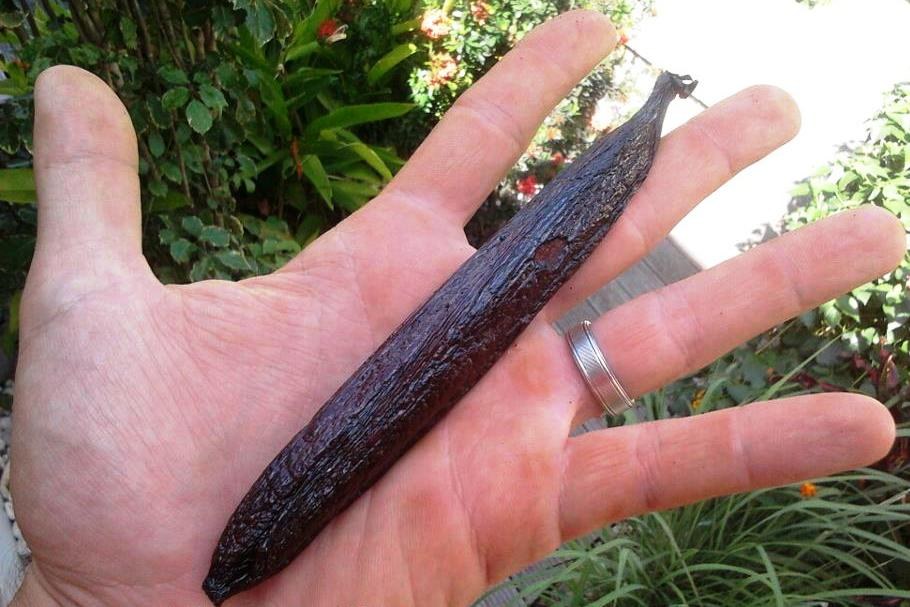
But vanilla cultivation is very demanding and requires a large workforce. Indeed, after five years of careful tending, the grower has three hours a day for three months to carry out fertilization. This involves opening with a pin the membrane that encloses the male organs and bringing them into contact with the female organs. Nine months later each plant bears less than a kilogram of fruit, which must be harvested and then transformed into this brown, supple, fragrant spice.
This transformation requires several operations and careful monitoring. There are in fact several techniques, but all are demanding. The one practiced in Guadeloupe produces frosted vanilla: a pod sparkling with pearls of aromatic sugar, the finest of the fine in vanilla. Each pod is scratched along each of its faces and carefully monitored for six months before being sorted so that only perfect products are put on sale.
An official desire to revive cultivation
It is because of this demanding, low-profitability work that vanilla cultivation was abandoned in Guadeloupe in favor of sugar cane and banana. Indeed, since the 1960s, Guadeloupe's vanilla production has been insufficient for local consumption and sales to tourists, so much so that it must be imported. But since 2001 the regional council has introduced measures to encourage the intensification of this cultivation and the production of a product richer in vanillin.